How to Get Your Dog to Accept a New Bowl in 2026?

Time:2026-09-26 Author:Sophia
0%

A new food bowl may look like a simple upgrade, but your dog may see a strange object in a familiar eating spot. It might smell different, slide across the floor, or make a sharp clink when the collar touches its rim. If you are asking, “why does my dog refuse new feeding bowls,” start by noticing what happens around the bowl rather than assuming your dog is being stubborn. Does your dog sniff and back away, eat only when food is moved, or seem uncomfortable chewing? Those details can help narrow down what is bothering them.

Small details matter. A gradual introduction is often more comfortable than replacing the old bowl overnight. Place the new bowl beside the familiar one, keep mealtimes calm, and let your dog investigate without pressure. Try a stable bowl in a quiet location, and check that its height and size suit your dog. If your dog eats from it willingly, you can slowly make it the usual option. Progress may be uneven. That is normal.

Watch your dog’s response, not just the bowl. Refusing food from every dish, showing pain while eating, or developing a sudden appetite change can point to a health issue. A veterinarian can help assess those signs. It is easy to blame the new bowl, but that guess can be wrong. Even sensible changes do not work for every dog, so adjust the pace and seek professional advice when concerns persist.
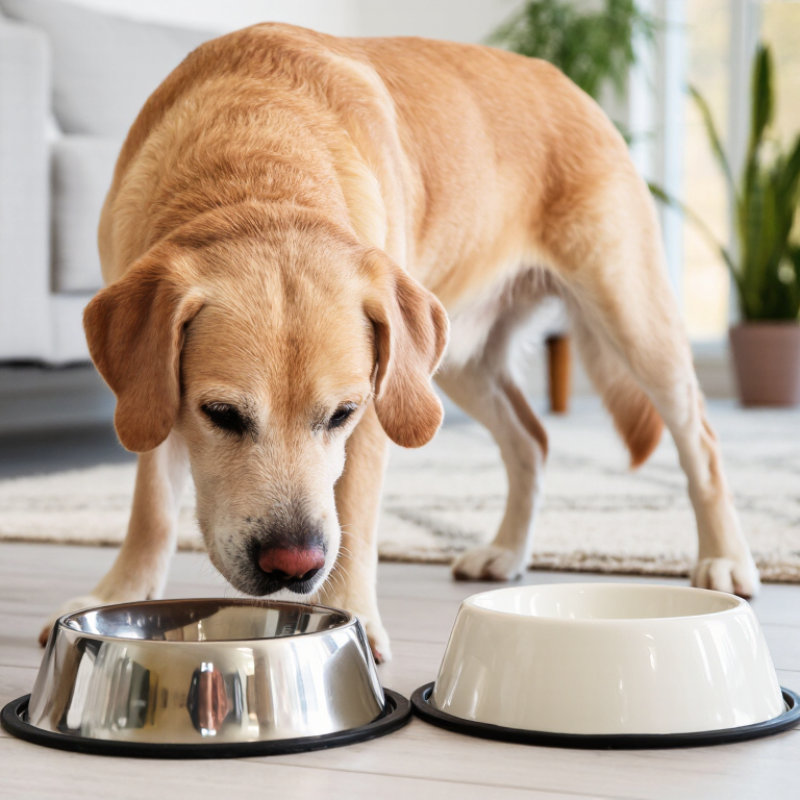
How to Get Your Dog to Accept a New Bowl in 2026?

Understand Why Your Dog May Reject a New Bowl

A dog may reject a new bowl because it smells unfamiliar, slides across the floor, or reflects light into its face. Metal can also clang against a tag or tile, creating a sudden sound near the dog’s head. In a 2020 Scientific Reports study of 13,715 Finnish dogs, about 32% were reported to fear fireworks. The study did not examine bowls, but it shows that sound sensitivity is common enough to consider. A sharp clink may feel more alarming to a noise-sensitive dog than it seems to us. That matters.

Notice what happens at mealtime. Does your dog approach, sniff, then back away when the bowl moves? Does the dog eat from a hand or a familiar dish, but not the new one? Those details can point to the trigger. Pain may also change eating behavior: dental soreness or neck discomfort can make lowering the head unpleasant. If refusal starts suddenly or comes with drooling, difficulty chewing, or reduced appetite, ask a veterinarian rather than assuming it is stubbornness. Try placing the new bowl beside the old one, on a nonslip mat, and let your dog investigate without pressure. I once would have blamed the bowl’s shape alone; that explanation can be too neat. Dogs do not tell us which detail bothers them.

Choose a Bowl That Fits Your Dog’s Needs

A bowl should fit your dog’s body and eating style, not just your kitchen. A small dog may struggle with a deep bowl, while a broad muzzle can bump against narrow sides. Check the bowl’s width and depth against your dog’s muzzle, and watch their posture during a normal meal. They should reach food comfortably without stretching or pressing their face into the rim. Small details matter. A non-slip base can help a bowl stay put on tile, and a lightweight bowl may slide around. Stainless steel and glazed ceramic are practical options when they are intact and easy to wash.

Tips: Measure the space your dog needs around their muzzle. Choose a stable bowl that is easy to clean. If your dog has trouble bending, ask your veterinarian whether a different height is appropriate.

A bowl that suits your dog can make meals feel less awkward, but a sudden change may still cause hesitation. Place the new bowl beside the familiar one for a few days, then offer a small portion in it. Keep the old bowl nearby at first. Notice what your dog does: sniffing, stepping away, or nudging the bowl can offer clues, though one reaction does not tell the whole story. If the bowl is noisy or reflective, try a quieter location or a different material. I would not assume every dog needs the same setup; their comfort can change with age, appetite, or health.

Introduce the Bowl Gradually in a Familiar Setting

How to Get Your Dog to Accept a New Bowl in 2026?

Introduce the Bowl Gradually in a Familiar Setting

Keep the new bowl where your dog usually eats, on the same quiet patch of floor. Familiar surroundings can make a change feel less alarming. Place the new bowl beside the old one, but do not remove the old bowl yet. Let your dog sniff it at their own pace. No pressure.

For a few meals, put a small treat or a little food in the new bowl while serving the rest in the usual one. You can also leave the empty bowl nearby between meals. Watch your dog’s posture: a loose body and curious sniffing are encouraging, while backing away or refusing food suggests you may be moving too quickly. Pause if needed. That’s not failure; it’s useful feedback.

Once your dog eats comfortably from the new bowl, gradually increase the amount of food served in it. Keep meal times and the bowl’s location consistent, and check that it sits flat without sliding or clattering. I’d avoid hovering or coaxing repeatedly; attention can sometimes add pressure. If your dog continues to avoid meals, seems distressed, or suddenly changes eating habits, ask a veterinarian for guidance.

Build Positive Associations with Food and Rewards

How to Get Your Dog to Accept a New Bowl in 2026?

A new bowl may smell, shine, or shift under your dog’s nose. Let your dog investigate it without pressure. Set it near the usual feeding spot, with a few familiar treats scattered around it. When your dog looks at or sniffs the bowl, calmly offer another treat. Keep your voice relaxed and your movements slow. The bowl should predict good things, not a sudden change to mealtime.

Try short sessions, then put the familiar bowl back for regular meals. Over several days, move the food a little closer to the new bowl, then place a small portion inside. Reward calm approaches, even if your dog only takes one bite. Small steps count. It is easy to move too quickly because the change seems minor to us. Watch for lowered posture, repeated backing away, or refusal to eat, and make the next step easier. Never withhold food to force acceptance. If your dog’s reluctance continues or appears suddenly with other eating changes, ask a veterinarian for advice.

How to Get Your Dog to Accept a New Bowl in 2026? - Build Positive Associations with Food and Rewards
Stage Suggested Timing What to Do Food and Rewards Signs to Look For
1. Introduce the bowl One or two short sessions Place the clean, empty bowl in a calm area. Let your dog approach and investigate at their own pace. Keep the familiar bowl available. Offer a small, familiar treat near the new bowl. Give praise calmly for relaxed looking or approaching. Your dog can look at, sniff, or move near the bowl without appearing worried.
2. Reward voluntary interaction Several brief sessions over 1–3 days, as needed Let your dog choose whether to move closer. Avoid holding them near the bowl or placing their face inside it. Reward small steps, such as sniffing the rim or standing beside the bowl. Keep rewards small so they do not replace a meal. Your dog approaches more readily and remains relaxed around the bowl.
3. Add a little familiar food At a normal mealtime Put a small portion of the usual food in the new bowl and set it beside the familiar bowl. Allow your dog to choose. Use the dog’s regular food, or a small amount of a suitable familiar topper if needed. Praise calm eating without interrupting. Your dog investigates or eats some food from the new bowl.
4. Gradually increase use Across several meals, at your dog’s pace If your dog is comfortable, gradually serve more of the meal in the new bowl. Keep the old bowl available until acceptance is consistent. Offer occasional praise or a small reward after a relaxed meal. Keep meal portions and routine otherwise familiar. Your dog eats comfortably from the new bowl across multiple meals.
5. Adjust if your dog hesitates Whenever signs of discomfort appear Pause, return to an easier step, and check that the bowl is stable, clean, and easy for your dog to reach. Try a quieter location if needed. Reward calm behavior; do not scold, force, or withhold food to make your dog use the bowl. Your dog can approach and eat without persistent avoidance or visible distress.
When to seek help If refusal persists or eating changes suddenly Contact a veterinarian if your dog stops eating, seems painful, has trouble chewing or swallowing, or shows other unusual symptoms. A veterinarian can help rule out health or comfort issues before you continue training. Prioritize your dog’s health and normal food intake over switching bowls quickly.

Adjust Your Approach if Your Dog Still Avoids It

If your dog still avoids the new bowl, pause the switch. A dog may dislike its slippery base, shiny surface, or the sound of a tag hitting the rim. Watch from a few feet away. Does your dog approach, sniff, then retreat? That detail can point to the problem. I once changed too many things at once, and it made the bowl harder to assess.

Move the bowl to a quiet spot with steady flooring. Try placing it on a non-slip mat, and wash away any unfamiliar scent with mild, unscented soap. Keep the old bowl nearby. For a few meals, offer food in both, then gradually reduce what you put in the old one. Let your dog choose. No pushing.

Make each step easy. Place a few treats beside the new bowl, then closer to its rim over several sessions. Keep sessions brief, and stop if your dog looks tense or backs away. Progress may be uneven. If your dog avoids all food or water, seems unwell, or suddenly changes eating habits, contact a veterinarian; don’t assume the bowl is the only cause.

How to Get Your Dog to Accept a New Bowl in 2026

A gradual, example acclimation plan. These session lengths are suggestions, not research findings.

Start with the bowl nearby and reward calm behavior. Increase the session gradually only while your dog stays comfortable; if your dog avoids the bowl, shorten the session or return to an easier stage.

FAQS

How can I tell if a bowl fits my dog?

Check its width and depth against your dog’s muzzle. Your dog should reach food without stretching or pressing their face against the rim. Watch during a normal meal.

What bowl features can make mealtime more comfortable?

A stable, easy-to-clean bowl can help. A non-slip base may keep it in place on tile. Stainless steel or intact glazed ceramic are practical options.

How should I introduce a new bowl?

Put it beside the familiar bowl in the usual eating spot. Let your dog sniff it at their own pace. No pressure.

Should I switch all the food to the new bowl right away?

Not necessarily. For a few meals, offer a small treat or portion in the new bowl. Keep the rest in the familiar one, then increase the amount gradually.

What behaviors should I watch for?

Curious sniffing and a relaxed posture can be encouraging. Backing away or refusing food may mean the change is too fast. One reaction does not tell the whole story.

What if the bowl slides, clatters, or looks reflective?

Check that it sits flat and stays put. If noise or reflections seem unsettling, try a quieter spot or another material. I might be overthinking the shine, but your dog’s response matters.

Should every dog use the same bowl setup?

No. Muzzle shape, age, appetite, and health can affect comfort. If bending seems difficult, ask a veterinarian whether a different height is appropriate.

When should I seek professional guidance?

Ask a veterinarian if your dog keeps avoiding meals, seems distressed, or suddenly changes eating habits. Pause the transition if needed. That is useful feedback.

Conclusion

Helping a dog accept a new bowl starts with understanding what may be causing the hesitation. If you are wondering “why does my dog refuse new feeding bowls,” consider changes in the bowl’s shape, height, material, smell, or sound, as well as whether it moves or feels uncomfortable. Choose a bowl that suits your dog’s size, eating style, and needs, and place it in a familiar, calm spot.

Introduce the bowl gradually rather than making it the only option right away. Let your dog investigate it, then build positive associations by placing treats nearby or serving a small amount of food in it. Offer gentle praise when your dog approaches or eats, and keep mealtimes relaxed. If your dog continues to avoid the bowl, try changing its position or type, and return to a familiar bowl temporarily while making adjustments at your dog’s pace.

Sophia

Sophia

Sophia is a dedicated marketing professional with an exceptional depth of knowledge about her company's products and services. With a keen understanding of market trends and customer needs, she crafts insightful blog posts that not only inform but also engage readers, enriching the company’s online......