Choosing the right feeding routine can make mealtimes calmer, cleaner, and safer for your pet. Many dogs and cats eat too quickly, swallow air, or finish before they feel satisfied. A slow feeder bowl may help by adding small ridges, channels, or openings between bites. Still, the ideal schedule depends on your pet’s size, age, eating speed, health, and comfort.
So, how often should I use slow feeder bowls? For many healthy pets, using one at every regular meal can work well. Others may need a gradual introduction, especially if the bowl feels frustrating. Start with one meal daily, then observe your pet closely. Look for relaxed eating, normal breathing, and steady interest in food. Excessive pawing, whining, vomiting, or leaving meals unfinished suggests the design may not suit them.
Small details matter. A bowl should stay stable on the floor and be easy to wash. The spaces must fit your pet’s muzzle and food size. Wet food can dry inside narrow grooves. Kibble can become trapped. That part is often overlooked. Some pets eat more calmly with a shallow puzzle design, while others need a simpler shape. There is no perfect routine for every animal. Veterinary advice is especially important for pets with dental problems, digestive conditions, or sudden appetite changes. A slow feeder supports healthier habits, but it should not replace professional assessment or careful observation.
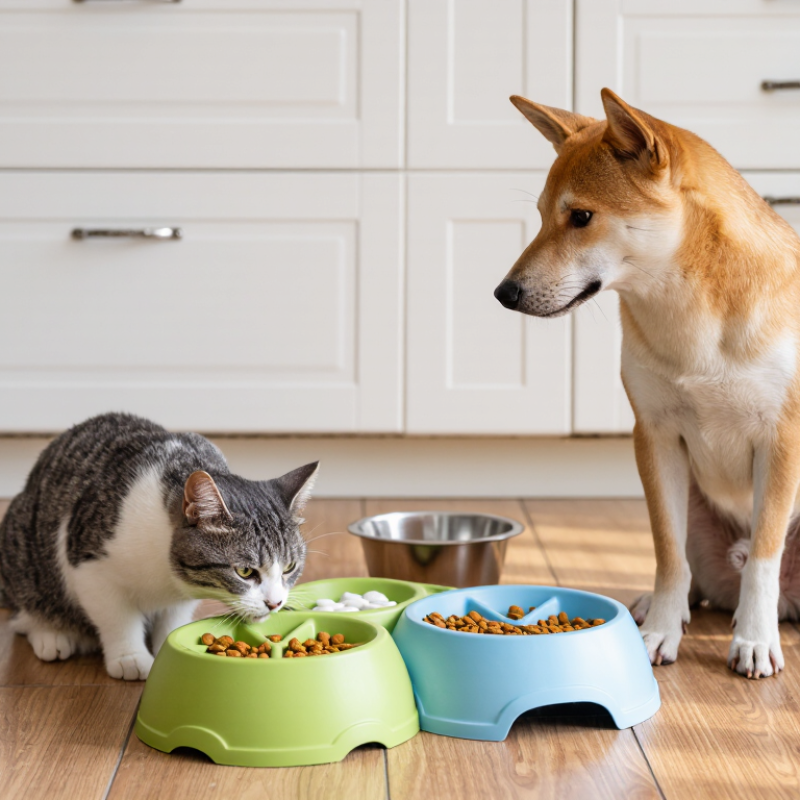
Veterinary Baseline: Use a Slow Feeder at Every Meal for Fast Eaters
How Often Should I Use a Slow Feeder Bowl?
For fast eaters, veterinary guidance commonly supports using a slow feeder at every meal. Consistency helps the dog practice a calmer eating rhythm. One occasional use may not change a habit that repeats twice daily. A bowl with ridges can turn a meal into small searches, rather than one quick gulp.
Watch the first few meals closely. I look for steady chewing, relaxed body language, and normal breathing. If your dog pushes the bowl aggressively, drops food, or gives up, the design may be too difficult. Some dogs need wider channels or a shallower bowl. This part can take trial and error.
Introduce the bowl with the usual food and a quiet feeding area. Keep fresh water nearby, especially after dry food. Wash the bowl after each use, because narrow spaces can hold oily residue. If your dog coughs, vomits, strains, or seems unusually frustrated, stop and contact a veterinarian. Slow feeding is helpful, but it is not a treatment for every digestive problem.
I once assumed slower was always better. That was too simple. A nervous dog may eat less when the challenge feels confusing. Check weight, stool, appetite, and energy each week. Adjust the bowl if those details change.
Measure Eating Speed: Meals Finished in Under 5 Minutes Need Attention
How Often Should I Use a Slow Feeder Bowl?
Measure eating speed before changing your pet’s routine. If a meal disappears in under five minutes, pay attention. Fast eating can cause choking, vomiting, swallowed air, or poor digestion. Watch the bowl, not just the clock. Does your dog cough, gulp loudly, or push food around? These details matter.
A slow feeder bowl can be used for every meal when your pet eats calmly from it. Start with one meal daily for three or four days. Then check for frustration, pawing, or unfinished food. If your pet stays relaxed, use it more often. Some veterinary professionals recommend slower feeding for pets that gulp, but the right design depends on muzzle shape, food type, and mobility.
Keep portions measured, and place the bowl on a stable, washable surface. A meal that takes ten to fifteen minutes may be more comfortable than one finished in two minutes. However, slower is not always better. I have seen owners focus so much on timing that they miss stress signals. That is an easy mistake. If vomiting continues, appetite changes, or your pet seems painful, stop experimenting and contact a veterinarian. A slow feeder supports healthy habits, but it cannot diagnose a medical problem.
Set the Frequency: Aim for a 10–15-Minute Mealtime, Then Reassess
A slow feeder should usually be offered at every meal, but frequency depends on your pet’s response. Aim for a 10–15-minute mealtime, then reassess after several days. This target is practical, not a universal veterinary rule. Major veterinary guidelines do not prescribe one exact feeding duration for every dog or cat.
The Association for Pet Obesity Prevention reported in 2022 that about 59% of surveyed dogs and cats were overweight or obese. Portion control still matters more than the bowl itself. Measure the daily ration, then divide it into regular meals. If your pet finishes in three minutes, increase the puzzle difficulty slightly. If food remains after 15 minutes, the design may be too demanding.
Watch the details. Your dog should eat calmly, without pawing frantically or abandoning the bowl. Cats may need wider grooves because their whiskers can brush the sides. Some pets gulp more when frustrated. That is a warning, not progress. The American Animal Hospital Association’s weight-management guidance supports controlled portions and enrichment, but individual plans should account for age, health, and body condition.
Start with one slow-feeder meal daily. Move toward every meal only when stools, appetite, and behavior remain normal. I would reassess weekly, although that interval is not perfect. A sudden change in eating speed can also reflect dental pain, nausea, or stress. Consult a veterinarian if the change persists.
How Often Should I Use a Slow Feeder Bowl?
Aim for a 10–15-minute mealtime, then reassess your pet’s comfort, appetite, and eating pace.
Use the slow feeder at regular meals and monitor the duration. If eating remains too fast, too slow, or causes frustration, adjust the bowl design or feeding routine.
Protect Portion Control: Follow AAHA Weight-Management Monitoring Guidance
How Often Should I Use a Slow Feeder Bowl?
Protect Portion Control: Follow AAHA Weight-Management Monitoring Guidance
A slow feeder bowl can be used at every meal if your pet eats comfortably. It may reduce gulping and create a calmer eating rhythm. However, the bowl does not control calories. Measure each portion with a kitchen scale, especially when weight loss is the goal. Small grooves can hide leftover food, so wash the bowl thoroughly after use.
AAHA weight-management guidance emphasizes regular monitoring, not guesswork. Record your pet’s weight, body condition, meal amounts, treats, and activity. During an active weight-loss plan, veterinary rechecks may occur every two weeks until progress becomes steady. After reaching a healthy target, less frequent checks can help maintain it. Your veterinarian may adjust calories based on these results.
Watch the pet, too.
Some animals become frustrated by deep or complicated designs. Stop using the bowl if you notice pawing, repeated vomiting, damaged teeth, or refusal to eat. A shallow option may work better. I once thought slower eating always meant better digestion, but that assumption can fail. Portion size still matters, even when every meal takes twice as long. If weight does not change after several monitored weeks, review treats, food measurements, exercise, and medical factors with a veterinary professional.
Follow FDA Hygiene Guidance: Wash Food-Contact Bowls After Every Use
How Often Should I Use a Slow Feeder Bowl?
Follow FDA Hygiene Guidance: Wash Food-Contact Bowls After Every Use
You can use a slow feeder bowl at every meal if your pet eats comfortably. Its ridges can slow gulping and create a calmer feeding routine. However, the bowl needs cleaning after each use. FDA food-safety guidance recommends washing pet food bowls and utensils with hot, soapy water after feeding.
I used to rinse a bowl and call it clean. That was not enough. Food can hide inside narrow grooves, especially when wet food dries overnight. Wash the bowl soon after your pet finishes eating. Use a small brush to reach the corners, then rinse away all soap. Let the bowl air-dry fully before adding more food.
Dry food still leaves crumbs, oil, and saliva behind. Do not reuse the same unwashed bowl throughout the day. Check it closely each evening. Scratches, cracks, or cloudy surfaces may trap residue and bacteria. Replace damaged bowls when cleaning becomes difficult. I sometimes clean too quickly when mornings feel rushed. That habit deserves correction. A few extra seconds can prevent stale smells and buildup. If your pet refuses the cleaned bowl, check for lingering detergent or a strong odor. Cleaning should protect mealtimes, not make them uncomfortable.
How Often Should I Use a Slow Feeder Bowl? — Follow FDA Hygiene Guidance: Wash Food-Contact Bowls After Every Use
| Use or Hygiene Task |
Recommended Frequency |
Why It Matters |
Practical Guidance |
| Dry food served in a slow feeder |
Use at each meal if the pet benefits from slower eating |
A slow feeder can help make food intake slower and may reduce rapid gulping. |
Choose a bowl that allows the pet to reach the food comfortably without excessive frustration. |
| Wet food served in a slow feeder |
Use at the meal, then wash immediately after the bowl is emptied |
Moist food leaves residue that can support the growth of microorganisms if the bowl is not cleaned. |
Do not leave uneaten wet food at room temperature for extended periods. Follow the food label and veterinary guidance for storage. |
| Food-contact bowl cleaning |
After every use |
The U.S. Food and Drug Administration advises washing pet food bowls and utensils that contact food after each use. |
Remove leftover food, wash with hot water and dish soap, rinse thoroughly, and allow the bowl to dry completely. |
| Slow feeder grooves, ridges, and compartments |
Inspect after every meal; scrub during every wash |
Food particles can remain hidden in narrow areas even when the bowl looks clean. |
Use a suitable brush or sponge to reach recessed areas. Follow the cleaning instructions for the bowl material. |
| Water bowl |
Refresh at least daily; wash regularly and whenever dirty |
Water bowls can accumulate saliva, food debris, and environmental contamination. |
Provide fresh water and clean the bowl more often in hot weather or when multiple pets share it. |
| Bowl inspection |
Before each use |
Cracks, deep scratches, peeling surfaces, and damaged seams can trap food and make cleaning less effective. |
Replace the bowl when it is damaged, difficult to clean, or retains odors after washing. |
| Hand hygiene |
Wash hands after handling pet food, bowls, or utensils |
Handwashing helps reduce the transfer of microorganisms between pet food, household surfaces, and people. |
Use soap and running water, especially before preparing human food or eating. |
| When to stop using the slow feeder temporarily |
Whenever the pet shows difficulty or distress |
A feeding aid should support comfortable eating, not cause pain, excessive frustration, or inability to access food. |
Stop use and consult a veterinarian if the pet coughs, vomits repeatedly, cannot eat comfortably, or shows persistent feeding problems. |
Key takeaway: A slow feeder may be used at every meal when appropriate for the pet, but the food-contact bowl should be emptied and washed after every use. Always follow the product’s care instructions and seek veterinary advice for ongoing eating or digestive concerns.
FAQS
Offer it at every meal when your pet eats calmly. Consistency helps build a steadier eating rhythm.
Not always. Start with one meal daily for three or four days, then observe behavior and appetite.
Aim for about 10–15 minutes. This is a practical target, not a universal medical rule.
Watch closely for coughing, loud gulping, vomiting, or swallowed air. These signs deserve attention.
Look for frantic pawing, dropped food, unfinished meals, or repeated frustration. The design may need wider channels.
Often, yes. Wider grooves may prevent whiskers from brushing narrow sides and causing discomfort.
Return to an easier design or the usual bowl temporarily. A confused or nervous pet may lose interest in food.
No. Measure daily portions and divide them into regular meals. The bowl supports pacing, not weight management alone.
Place it on a stable, washable surface. Wash it after each use because narrow spaces can hold oily residue.
Stop experimenting if vomiting, coughing, pain, appetite changes, or unusual frustration continues. A slow feeder cannot diagnose illness.
Conclusion
How often should I use slow feeder bowls? For dogs or cats that eat too quickly, a slow feeder can be used at every meal. Start by measuring how long your pet takes to finish a normal portion. Meals completed in fewer than five minutes may indicate that a slower feeding method is needed. The goal is to extend mealtime gradually to about 10–15 minutes while keeping your pet comfortable and relaxed.
Continue observing eating speed, digestion, body condition, and overall weight. A slow feeder should support portion control, not encourage extra food, so measure each meal and adjust portions according to your veterinarian’s weight-management recommendations. Reassess regularly to ensure the bowl remains helpful and suitable. For hygiene, wash the food-contact bowl after every use with hot, soapy water, rinse it thoroughly, and allow it to dry completely before the next meal.

 Croi Pet