A dog that gulps dinner may swallow air along with every bite. That air can later escape as flatulence, especially after rapid meals. Veterinary guidance from Merck Veterinary Manual identifies aerophagia and dietary factors as common contributors to canine gas. VCA Animal Hospitals similarly notes that swallowed air can increase intestinal gas. These sources support the mechanism, but they do not prove that every slow feeder will solve the problem.
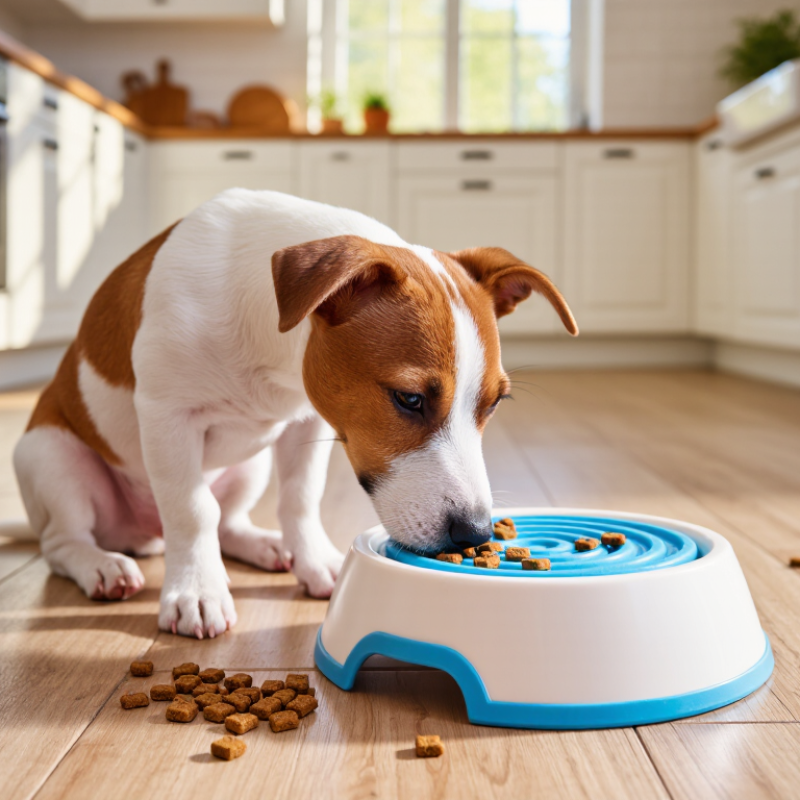
So, can slow feeders reduce gas in dogs? They may help some dogs by extending mealtime and encouraging smaller, steadier bites. A maze bowl can turn a two-minute meal into ten calmer minutes. The dog pauses, sniffs, and works around raised ridges instead of inhaling food. That practical change may reduce swallowed air, although bowl design, food texture, breed, and eating posture also matter. Flat-faced breeds deserve special attention because their anatomy can promote air swallowing.
The wider pet-care industry shows why this question matters. The American Pet Products Association’s 2023–2024 National Pet Owners Survey estimated 65.1 million U.S. households included a dog. More households are seeking preventive feeding strategies, not only emergency solutions. Still, product popularity is not clinical proof. The 2022 State of Pet Obesity Report also estimated that 59% of surveyed dogs were overweight or obese, reminding owners to measure portions carefully. A slow feeder should support controlled eating, not encourage extra treats.
Evidence remains limited.
Persistent gas, abdominal swelling, vomiting, pain, or sudden appetite changes require veterinary assessment. A feeder can be useful. It is not a diagnosis.
Why Can Slow Feeders Reduce Gas in Dogs?
How Dogs Swallow Air While Eating Too Quickly
Dogs often gulp air when they eat with urgency. Their mouths pull in food, saliva, and air together. That extra air travels into the stomach and intestines. Later, it may leave as burping or flatulence. A slow feeder adds ridges or compartments between bites. The dog must pause, move the muzzle, and chew more carefully. This can reduce the amount of air swallowed during each meal.
Picture a dog eating from a flat bowl. The meal may disappear in two minutes. Kibble scatters, the stomach fills quickly, and the dog may swallow without resting. With a slower bowl, the same meal can take longer. Some dogs breathe more calmly, too. That small change may ease noisy digestion after meals. However, results differ between dogs. A determined eater may still rush around the obstacles.
A slow feeder is not a complete treatment for gas. Diet changes, food intolerance, intestinal disease, and stress can also contribute. Persistent gas deserves veterinary attention, especially with vomiting, pain, weight loss, or a swollen abdomen. Choose a feeder that is stable, easy to clean, and not frustratingly deep. Observe the first meals. If the dog becomes distressed, stops eating, or damages the bowl, reconsider the design. The helpful idea is slower eating, not making mealtime a puzzle at any cost.
Many dogs gulp meals within minutes, barely chewing. They may also swallow air with each mouthful. That extra air can increase belching, abdominal sounds, and visible discomfort. Veterinary guidance from the Merck Veterinary Manual identifies rapid eating and aerophagia as possible contributors to digestive distress. A slow feeder changes the meal from a short gulping event into repeated pauses.
The raised ridges interrupt easy access to food. Dogs must lick, nudge, and reposition their mouths. This encourages smaller bites and more chewing. It also creates a calmer rhythm. A 2022 State of Pet Obesity Report estimated that 59.3% of surveyed U.S. dogs were overweight or obese. Slower feeding may support portion awareness, but it does not replace measured calories or veterinary advice.
Watch the dog, not only the bowl. Some dogs become frustrated, paw aggressively, or swallow faster when the design feels difficult. That can defeat the purpose. Start with a shallow pattern and a familiar portion. Observe breathing, posture, stool quality, and burping for several days. The evidence is useful, but not perfect. Gas can also reflect diet changes, food intolerance, parasites, or gastrointestinal disease. Persistent bloating, retching, or pain needs prompt veterinary assessment.
Some dogs eat as if the bowl might disappear. They gulp food, swallow air, and often burp minutes later. This swallowed air, called aerophagia, can travel through the digestive tract and increase flatulence. A slow feeder adds ridges, spaces, or gentle obstacles. These features make each mouthful smaller and slower. Less frantic eating may mean less air entering the stomach.
In feeding observations, dogs using a suitable slow feeder often pause more naturally. Their breathing seems calmer, and the sharp sounds of gulping become less frequent. The effect is not magic. Gas may also come from sudden diet changes, rich treats, food intolerance, or poor digestion. I once assumed fast eating explained every noisy stomach. That was too simple. When one dog slowed down but still had gas, reviewing the diet became more useful than changing the bowl again.
Choose a feeder that matches the dog’s muzzle and eating style. Deep grooves can frustrate short-nosed dogs, while tiny spaces may trap food. Watch for stress, pawing, or unfinished meals. Wash the feeder after use, especially when wet food remains in narrow gaps. If bloating, vomiting, pain, weight loss, or persistent gas appears, contact a veterinarian. Reduced air intake can help, but it cannot explain every digestive problem.
Why Can Slow Feeders Reduce Gas in Dogs?
Slow feeders use ridges, raised sections, mazes, or separate food pockets. These designs make dogs work around obstacles instead of swallowing large mouthfuls. Eating quickly can increase swallowed air, called aerophagia, which may contribute to burping and flatulence. A slower pace may help. However, gas can also result from diet changes, food intolerance, or digestive illness.
The best design depends on the dog’s muzzle, eating style, and food type. A shallow, wide bowl may suit a flat-faced dog better than a deep maze. Smaller sections can help a dog pause between bites. In daily use, caregivers may notice fewer gulping sounds, less post-meal bloating, and calmer feeding behavior. Some dogs also seem more mentally engaged. It turns dinner into a small search task.
Slow feeders have limitations. A very complex pattern can cause frustration, especially when wet food sticks inside narrow grooves. Dogs may paw, tip, or chew the bowl, creating messes or damaged pieces. Clean the feeder after each use, particularly with moist food. Gas may continue despite slower eating. Persistent bloating, vomiting, pain, appetite changes, or unusual stools require veterinary attention. I would not treat a slow feeder as a cure. Testing one design for several meals can reveal whether the dog eats comfortably, but my judgment could still be wrong.
Slow feeders use ridges, mazes, or separated compartments to make dogs work around obstacles while eating. This can reduce rapid gulping and the amount of air swallowed with food, although results vary by dog, food type, and feeder design.
The chart uses an evidence-informed relative scale from 1 to 5 to compare common design characteristics. It is not a clinical measurement, and slow feeders are not a guaranteed treatment for gas, bloat, or other digestive problems. Deep or difficult designs may frustrate some dogs and can be harder to clean.
Why Can Slow Feeders Reduce Gas in Dogs?
How to Choose and Introduce the Right Slow Feeder
Fast eating can make dogs swallow extra air, which may contribute to burping, bloating, and flatulence. A slow feeder adds small barriers around the meal, encouraging licking, pausing, and repositioning. It may help, but it cannot fix every digestive problem. Persistent gas, vomiting, diarrhea, or a swollen abdomen needs prompt veterinary advice.
Choose the feeder around your dog’s body and eating style. A broad, shallow design often suits short-nosed dogs better than deep grooves. Large dogs may need a heavy, non-slip bowl that does not slide across the floor. Look for food-safe materials, smooth edges, and grooves your hand can reach for cleaning. Avoid overly complex patterns at the beginning. Frustration is not enrichment.
Introduce it gradually. Put a small portion of the usual food into the feeder, then serve the rest in the regular bowl. Watch closely. The dog should stay interested without pawing, whining, or biting the bowl. Increase the slow-feeder portion over several meals. Wet food may work better in some designs, while dry kibble can scatter too easily in others. Test the setup on a washable mat.
One detail is easy to miss: clean the narrow channels after every meal. Leftover food can spoil quickly. If gas continues despite slower eating, reconsider the diet, treats, and meal size with a veterinarian. The feeder may be helpful, but it is not a diagnosis.
It slows each mouthful and may reduce swallowed air. Less gulping can mean fewer burps and less flatulence. It is not magic.
Aerophagia means swallowing excess air while eating. That air can move through the digestive tract and increase gas.
Choose a broad, shallow design with gentle spaces. Deep grooves may cause frustration or make food difficult to reach. Keep the meal calm.
A heavy, non-slip feeder can prevent sliding across the floor. Choose smooth edges and spaces that your hand can clean easily.
Start with a small portion of familiar food. Serve the remaining food in the regular bowl. Increase the slow-feeder portion over several meals.
Watch for pawing, whining, biting, or unfinished meals. These signs may show frustration rather than healthy enrichment. I once assumed slower eating was always better. That was too simple.
No. Gas may also come from diet changes, rich treats, food intolerance, or poor digestion. Review meals and treats with a veterinarian if gas continues.
Contact a veterinarian for bloating, vomiting, diarrhea, pain, weight loss, or a swollen abdomen. Persistent gas also deserves attention. Do not blame the bowl alone.
Wash it after every meal, especially after wet food. Check narrow channels for sticky leftovers. Food trapped overnight can spoil quickly.
Can slow feeders reduce gas in dogs? In many cases, they may help by encouraging dogs to eat more slowly and chew more carefully. Dogs that gulp their meals often swallow excess air, which can contribute to burping, bloating, and intestinal gas. A slow feeder uses ridges, compartments, or other gentle obstacles to make food more challenging to reach, naturally extending mealtime and reducing rapid air intake.
Different designs work for different dogs, so the feeder should be appropriately sized, stable, easy to clean, and comfortable for the dog to use. Some dogs may become frustrated, while others may need a gradual introduction with small portions or familiar food. Slow feeders can support healthier eating habits, but they are not a guaranteed solution for gas caused by food sensitivities or medical conditions. Persistent gas, discomfort, vomiting, or abdominal swelling should be discussed with a veterinarian.
