Changing a pet’s feeding bowl can look simple, but the transition deserves patience. Many dogs eat quickly because of habit, excitement, competition, or food insecurity. A slow feeder changes the texture, movement, and effort of each meal. Some pets accept it immediately. Others paw at it, bark, or leave food behind.
Dr. Jamie Richardson, DVM, a veterinarian experienced in companion-animal care, explains, “A slow feeder should make meals safer and more engaging, not stressful for the pet.” Her point matters because speed is only part of the problem. Owners should also watch for vomiting, coughing, bloating, dental discomfort, or sudden appetite changes. These signs may require veterinary advice rather than a different bowl.
Learning how to transition from normal bowl to slow feeder usually works best through small, visible changes. Start by placing the new feeder beside the familiar bowl. Add a small portion of food inside it, while serving the rest normally. After several calm meals, increase the amount gradually. Choose wide channels for flat-faced dogs or pets with short noses. Avoid deep grooves that force uncomfortable neck positions.
A practical detail helps: test the feeder with soft food before using dry kibble. Watch whether your pet can reach every piece without frustration. The first attempt may fail. That is useful information, not disobedience. Some pets need a simpler design, shorter meals, or a slower schedule. Progress should be measured by relaxed eating, not by making the meal difficult.
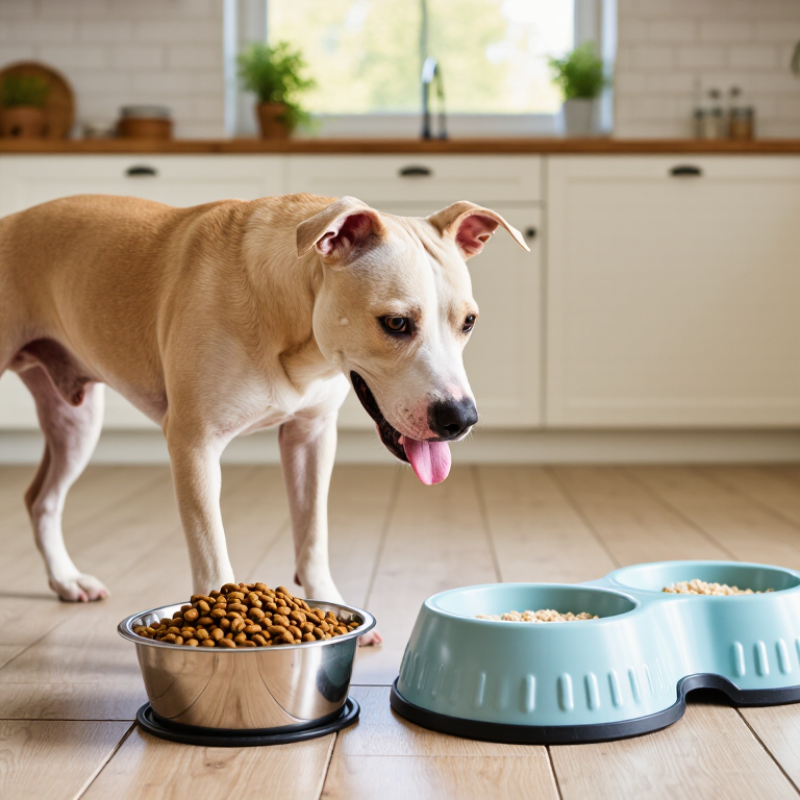
Many dogs and cats eat too quickly from a standard bowl. They may gulp air, cough, or finish within seconds. Switching to a slow feeder can make mealtimes calmer and more controlled. Its ridges, openings, or raised sections create small pauses between bites. This may support better chewing and reduce frantic eating. However, a slow feeder is not a magic fix. Some pets become frustrated, especially when the design is too difficult. Watch your pet’s body language, breathing, and eating speed. If vomiting, repeated coughing, or unusual discomfort continues, consult a qualified veterinarian.
Tips: Choose a feeder with shallow, smooth sections for beginners. Start with part of one meal inside it. Keep the remaining food in the usual bowl if your pet seems stressed. Use wet food only when the feeder is easy to clean. Wash it after every meal, since narrow spaces can hold old food and bacteria. A non-slip base helps prevent noisy sliding across the floor.
Transition gradually over several days. Sit nearby and observe without encouraging frantic licking. If your pet paws aggressively, abandons the food, or becomes tense, the feeder may be too challenging. Try a simpler design or return briefly to the standard bowl. This process may take longer than expected, and that is normal. The goal is a more comfortable eating rhythm, not the slowest possible meal.
How to Choose the Right Slow Feeder for Your Pet
A slow feeder should match your pet’s body, eating style, and daily food. It is not simply a bowl with deeper grooves. A flat-faced dog may struggle with narrow channels. A cat may dislike touching its whiskers against tall ridges. Choose wide, shallow sections for cats and short-nosed breeds. Larger dogs often need a heavier, non-slip base. The feeder should stay still while your pet nudges each piece of food.
The Association for Pet Obesity Prevention reported in 2022 that 53% of dogs and 59% of cats were overweight or obese. A slower meal may support portion control, but it cannot replace measured feeding or veterinary advice. Start with an easy pattern. Observe your pet for several meals. If your pet paws aggressively, coughs, or gives up, the design may be too difficult. My own first mistake was choosing a complicated feeder too quickly. It created frustration, not better eating. That detail is easy to miss.
Tips: Select food-safe, smooth materials with no sharp edges. Check whether the feeder fits your pet’s usual portion. Wash it after wet food, especially inside narrow channels. Increase difficulty gradually. A timer can help you compare meal times, but comfort matters more than a slower number. If vomiting, weight loss, or food refusal continues, contact a veterinarian. Some pets need a simpler solution.
Changing from a normal bowl to a slow feeder works best as a gradual training process. Start by placing both bowls side by side during one familiar meal. Let your dog sniff the new bowl without pressure. Add a small portion of regular food to it, while serving the rest in the usual bowl. Watch carefully. If your dog refuses the new bowl, reduce the portion and try again later.
Over several days, increase the amount served in the slow feeder. Keep the feeding location, schedule, and food unchanged. This helps your dog understand that only the bowl has changed. Choose a feeder with smooth edges and spaces wide enough for comfortable eating. A veterinary professional can help if your dog has dental pain, breathing problems, or difficulty reaching the food. Never force the muzzle into the feeder. That can create fear and resistance.
I once increased the portion too quickly, and the dog pushed the bowl across the floor. The lesson was simple: progress needs to feel easy. Use a non-slip mat and observe the first few meals from start to finish. If the dog paws aggressively, coughs, vomits, or stops eating, return to the previous step. Clean the bowl after each meal, especially around narrow ridges. Adjust the pace to the individual dog, not the calendar. Some dogs adapt in days. Others need several weeks.
How to Transition from a Normal Bowl to a Slow Feeder?
Changing bowls should be gradual and measurable. Record your dog’s meal time, portion, water intake, and behavior for three days. A stopwatch helps. If a meal usually takes two minutes, aim for four minutes first. Increase the challenge only when eating remains calm. AAHA’s 2021 Nutrition and Weight Management Guidelines recommend regular body condition scoring, not relying on weight alone. Check the ribs weekly. They should be easy to feel beneath a light fat covering.
Monitor signs beyond speed. Watch for pawing, bowl flipping, coughing, vomiting, loose stools, or sudden refusal. These details can reveal frustration or an unsuitable design. A 2022 Association for Pet Obesity Prevention survey estimated that 59% of U.S. dogs were overweight or obese. Slower eating may support portion awareness, but it does not replace measured feeding. I have seen owners celebrate a ten-minute meal while ignoring extra treats. That is an easy mistake. Keep the daily calorie total consistent, including training rewards. If appetite drops for more than a day, contact a veterinarian.
Tips: Start with part of the meal. Place the remaining food in the familiar bowl. Use the same food and feeding schedule. Choose shallow grooves for short-nosed dogs. Photograph the bowl before and after each meal. Review the notes after one week. Adjust slowly. Perfect progress is unlikely.
Ways to monitor eating habits and adjust the transition
This illustrative 14-day monitoring log shows how meal duration, gulping events, and uneaten food can change during a gradual transition. Begin with short slow-feeder sessions, compare the results with normal-bowl meals, and increase slow-feeder use only when eating remains calm and comfortable. If your pet repeatedly refuses food, vomits, coughs, or shows signs of distress, pause the transition and consult a veterinarian.
How to Transition from a Normal Bowl to a Slow Feeder?
Moving from a regular bowl to a slow feeder should be gradual. A sudden change may cause refusal, pawing, or frustrated chewing. Start by placing the slow feeder beside the familiar bowl during meals. Let your pet inspect it without pressure. Add a small portion of food to the feeder, then serve the rest normally. Increase the feeder portion over several days. In my experience, this approach reduces stress and supports a smoother adjustment.
Common problems need practical responses. Some pets push the feeder across the floor. A heavier design or a non-slip mat can help. Others become impatient when the grooves are too deep. Choose wider channels and watch their eating speed. Drooling, coughing, or repeated vomiting should not be ignored. Stop the trial and contact a qualified veterinarian. I once increased the difficulty too quickly, and the pet became anxious. That mistake showed me that slower is not always better; suitable difficulty matters more.
Tips: Measure each meal carefully. Smaller portions may work better. Wash the feeder after every wet-food meal. Check narrow corners for trapped residue. Supervise the first several sessions. If eating remains difficult, return to an easier bowl and reassess. Temperature, texture, and room noise can also affect feeding behavior. Observe patterns, not one unusual meal.
| Stage / Problem | Typical Situation | Practical Action | Suggested Duration | Success Indicator |
|---|---|---|---|---|
| Days 1–3: Familiarization | The pet is unsure about the new shape, ridges, or feeding position. | Place the empty slow feeder beside the familiar bowl. Add a small amount of food to both bowls and allow voluntary investigation. | 5–10 minutes per meal | The pet approaches the feeder calmly and eats without avoidance. |
| Days 4–6: Mixed Feeding | The pet accepts the feeder but still prefers the normal bowl. | Serve approximately 25% of the meal in the slow feeder and 75% in the normal bowl. Use the same food and feeding location. | 2–3 days | The feeder portion is finished with normal body language and no repeated bowl tipping. |
| Days 7–10: Increased Use | The pet can eat from the feeder but may become frustrated by deeper obstacles. | Increase the feeder portion to about 50%–75%. Start with shallow, widely spaced channels and spread food evenly. | 3–4 days | Meal completion remains consistent and eating is slower without signs of distress. |
| Day 11 Onward: Full Transition | The pet is comfortable using the new feeder during regular meals. | Use the slow feeder for the full meal if the pet eats comfortably. Keep the normal bowl available temporarily for a fallback option. | Ongoing monitoring | Calm eating, normal appetite, normal stool, and no damage to teeth, gums, or nails. |
| Food Is Left Behind | The feeder may be too deep, too complex, or difficult for the pet’s mouth size. | Switch to a shallower design, reduce the food depth, or use a larger feeder with wider spaces. Do not force completion. | Adjust within 1–2 meals | Most of the meal is eaten without repeated pauses caused by difficulty reaching food. |
| Feeder Is Tipped Over | The base is too light, the surface is slippery, or the pet is pushing the feeder. | Use a heavier, stable feeder with a non-slip base. Place it on a flat, dry surface and avoid elevated placement during the transition. | Immediate adjustment | The feeder stays in place throughout the meal. |
| Eating Becomes Too Fast | The feeder may be too easy, overfilled, or used with food that can be swallowed rapidly. | Spread food across the entire surface, use smaller portions more frequently, and select a moderately challenging design that still allows comfortable access. | Review after 2–3 meals | The pet takes smaller mouthfuls and shows fewer signs of gulping. |
| Frustration, Pawing, or Whining | The challenge level may be too high, or the transition may have progressed too quickly. | Return to the previous successful step, use a simpler feeder, and add a small amount of easily reachable food to build confidence. | 24–72 hours | The pet resumes eating calmly with less pawing or vocalization. |
| Food Gets Stuck or Spoils | Narrow channels can retain wet food, oils, or crumbs after feeding. | Remove uneaten food promptly, wash the feeder after each wet-food meal, and inspect grooves for residue, cracks, or odor. | After every wet-food meal | The feeder is visibly clean, dry, odor-free, and undamaged before reuse. |
| Coughing, Gagging, or Vomiting | The pet may be eating too quickly, struggling with the feeder, or experiencing an unrelated health issue. | Stop the trial, provide the usual safe feeding method, and contact a veterinarian if signs recur, persist, or are accompanied by weakness, breathing difficulty, or loss of appetite. | Stop and assess immediately | No repeated respiratory or digestive symptoms during normal feeding. |
| Teeth, Gum, or Nail Contact | Hard edges, damaged surfaces, or excessive pawing can cause irritation. | Discontinue use if the feeder has sharp edges, cracks, or chew marks. Choose a smooth, durable, appropriately sized design and inspect it regularly. | Inspect weekly | No bleeding, swelling, broken teeth, limping, or persistent licking of the paws. |
Raised sections create pauses between bites. This may reduce gulping, coughing, and frantic eating. Mealtimes can feel calmer.
Not always. A slow feeder is not a magic fix. Stop using it if vomiting, repeated coughing, or discomfort continues. Contact a qualified veterinarian.
Choose shallow, smooth sections with wide openings. Avoid deep grooves at first. Simple is better.
Place it beside the familiar bowl. Add only part of one meal. Keep the remaining food in the usual bowl.
Increase the feeder portion over several days. Some pets need longer. That is normal.
The design may be too difficult. Try wider channels or a simpler bowl. Return briefly to the old bowl if needed.
Select a heavy base or place it on a non-slip mat. It should stay still while your pet nudges food.
Wash it after every meal. Check narrow corners for trapped food. Wet food requires extra attention.
It may support slower eating and measured portions. It cannot replace portion control or veterinary advice.
Do not choose the hardest design immediately. My first choice caused frustration, not better eating. Comfort matters more than a slower timer.
Switching from a standard bowl to a slow feeder can help pets that eat too quickly, gulp air, or show signs of digestive discomfort after meals. The key to learning how to transition from normal bowl to slow feeder is to choose a design that matches your pet’s size, eating style, and comfort level. Select a stable, easy-to-clean bowl with obstacles that are challenging but not frustrating, then introduce it gradually by placing familiar food inside and keeping meal times calm.
During the transition, observe how long your pet takes to finish, whether they remain relaxed, and whether they show reluctance, pawing, or difficulty reaching the food. Start by using the slow feeder for one meal each day or combining it with the regular bowl, then increase usage as your pet adapts. If problems occur, try smaller food portions, simpler patterns, or hand-guided encouragement. Always prioritize comfort, hygiene, and consistent monitoring, adjusting the approach whenever your pet appears stressed or stops eating normally.
